

The cool in kuudere
Kuudere pairs English cool, rendered in Japanese as クール, with the affectionate element dere. The surface is steady rather than teasing or shy: short answers, a face that doesn’t broadcast excitement, no hurry to fill a silence. Practical action gives the audience the second layer. Watch who notices a missing chair or brings a meal without making a performance of it.
Composure can be professional armor or simply a character’s way of speaking. Neither requires coldness toward everyone. The character may be the most reliable person in the room precisely because they are paying attention rather than giving speeches.
Deadpan and quietly considerate
A deadpan version makes the tiny change in tone or timing count. A quietly considerate version may barely change their face, but their habits change: a second cup appears on the desk every morning. In a slow reveal, letting the audience spot the habit before the recipient does creates a different kind of intimacy.
“I bought two. The other one’s yours.”
The second cup has the exact order the listener mentioned once.
A foil who hears the small things
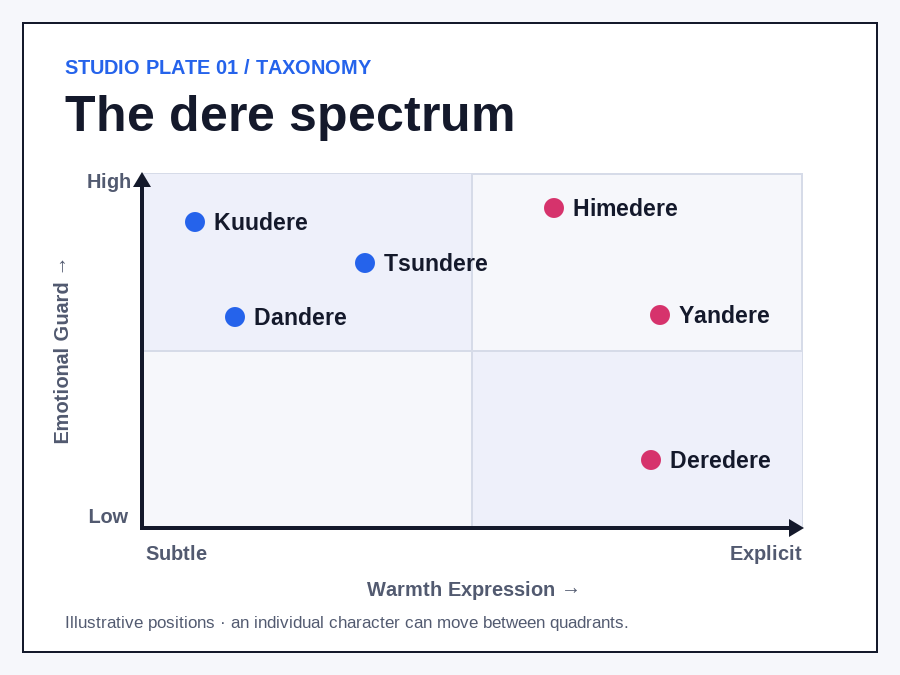
With a Dandere, two silences can be comfortable or can become an impasse. Give one of them a shared task that can carry the scene without a confession. A Deredere says the warm part aloud and makes a tiny change in response visible. Don’t make the louder character drag words out of the quieter one: an invitation is more interesting when it can be declined.
Compare Kuudere in the quiz or read the reference table.
Glossary sources: Shogakukan: dere-dere · Shogakukan: tsundere