

Why the room matters
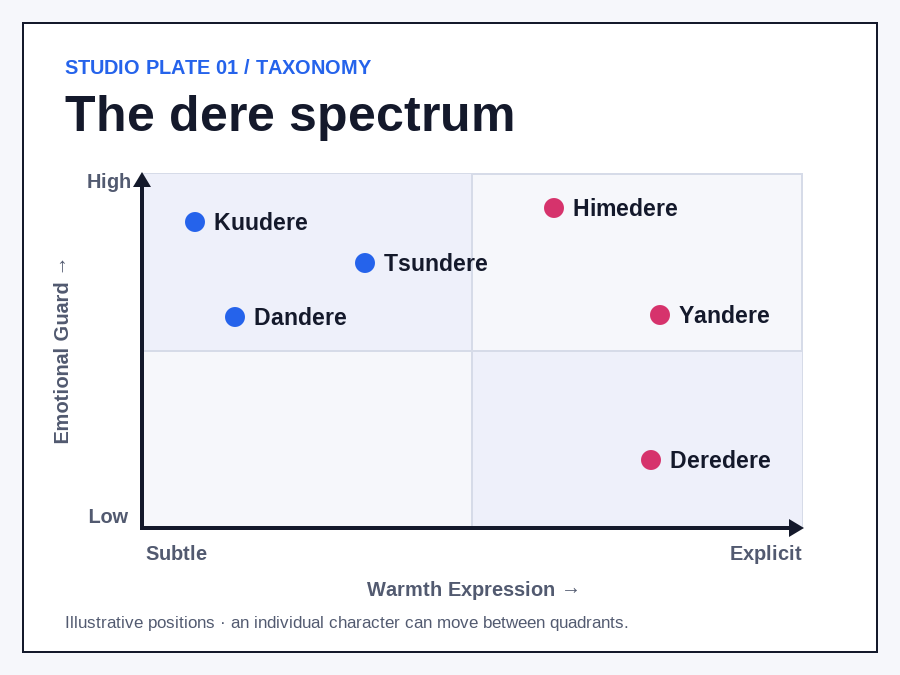
Dandere is often explained using danmari (silence) and dere-dere (open affection). The character might have plenty to say to a trusted friend but hold back when the rest of the club is listening. That is the big contrast with the Kuudere, whose composure can remain in both settings.
A story can do more than wait for one big confession. A joking text, a contribution to a shared project, or a private invitation can already be a sign of ease. Let the character initiate one of these moments; otherwise the story risks making trust something another person wins from them.
Room-shy and trust-first
A room-shy version goes quiet under public attention but speaks readily alone with a friend. A trust-first version takes longer even one-on-one; a respectful routine makes the change visible. These are reading strategies, not standardized Japanese categories. Neither version has to become a loud person in the last episode.
“Could I tell you one thing after everyone goes home?”
The listener waits until the room really is empty.
Write space, not pressure
A Kuudere can let the pause stand without misreading it as disinterest. A warm Deredere can invite rather than coax. An overconfident Kamidere can create friction by filling every pause; change the dynamic by having them finally ask instead of assuming. A silence can be an answer too.
Open the 24-scene test or look up Hajidere and the other labels.
Glossary sources: Shogakukan: dere-dere · Shogakukan: tsundere