
Two ways to show warmth
Deredere repeats the Japanese expressive word for visibly enamored behavior; in fan language it points to affection that doesn’t need a cold disguise. A sunny version says it in front of everybody; a steady version is more measured but just as clear. What matters is that the audience doesn’t have to solve a riddle to see the care.
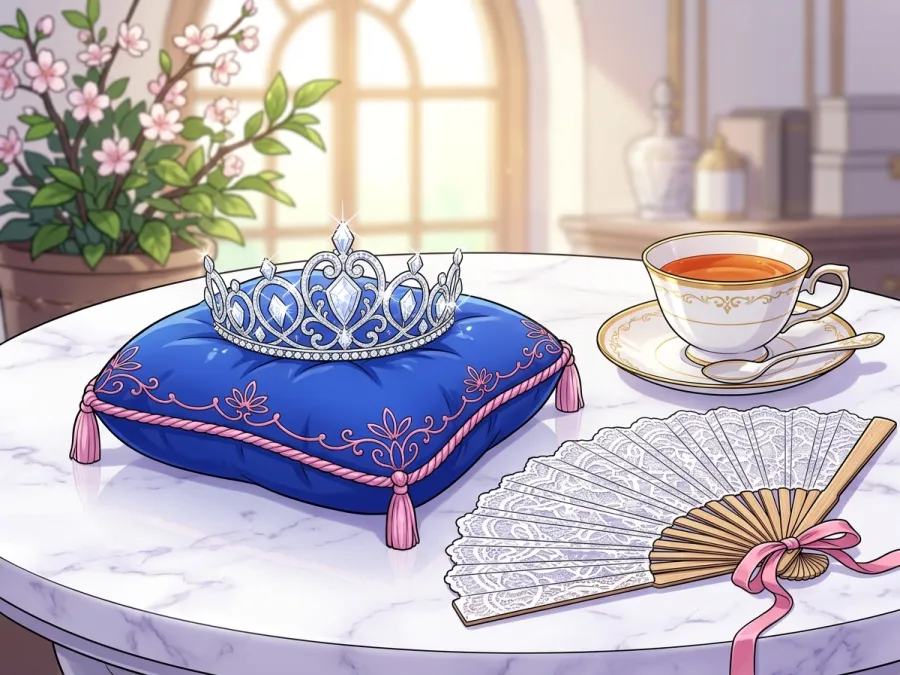
Himedere brings hime (princess) into the blend. A playful royal makes special treatment into a bit that both characters can enjoy. A status-first royal expects others to play along and can mistake attention for proof of rank. The emotional engine can be a genuine wish to be seen on a day when everyone else feels interchangeable.
Give them the same scene
Deredere: “I wanted to sit next to you, so I saved a seat.”
Himedere: “Only the best seat is worthy of my guest. It happens to be next to me.”
Both lines create a place beside the speaker. The first answers why right away. The second wraps the answer in performance. Kamidere usually reaches further: not just “treat me specially,” but “my judgment should decide.” Oujidere is a prince-role label and can tell a similar status story without being an exact mirror in every fandom.
Chemistry and friction
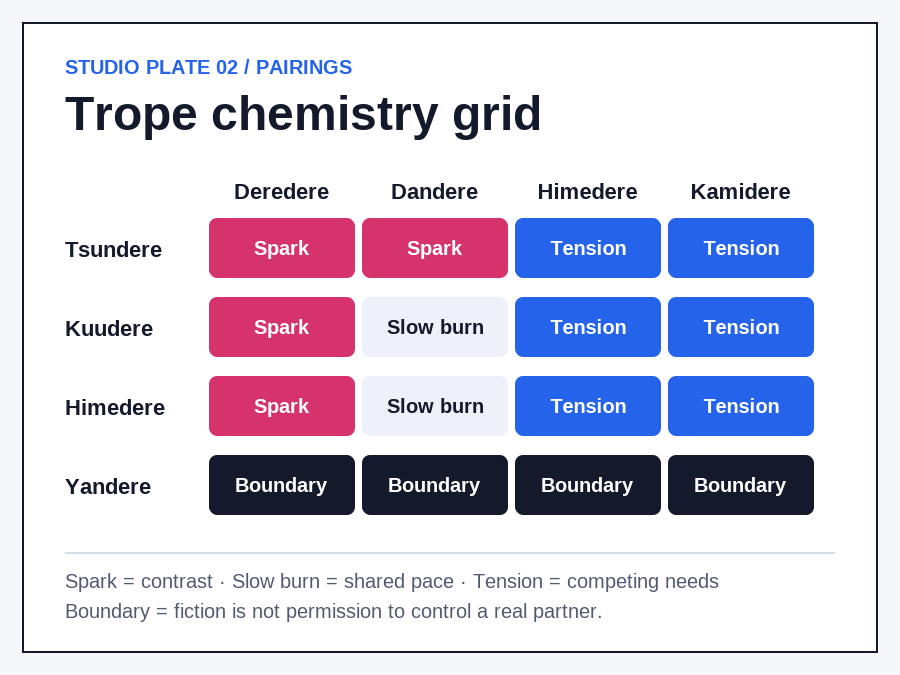
A Tsundere can give a Deredere a good reason to play the scene twice, publicly and privately. With Himedere and Kamidere, one asks for esteem while the other expects authority, so even choosing a table can become a contest. Whether that yields a warm or sharp scene depends on whether they hear a refusal.
Take the test or browse all sixteen types.
Glossary sources: Shogakukan: dere-dere · Shogakukan: tsundere